Dealing with Summer Mud: What to Do When Heavy Rains Saturate Your Keenesburg Leach Field
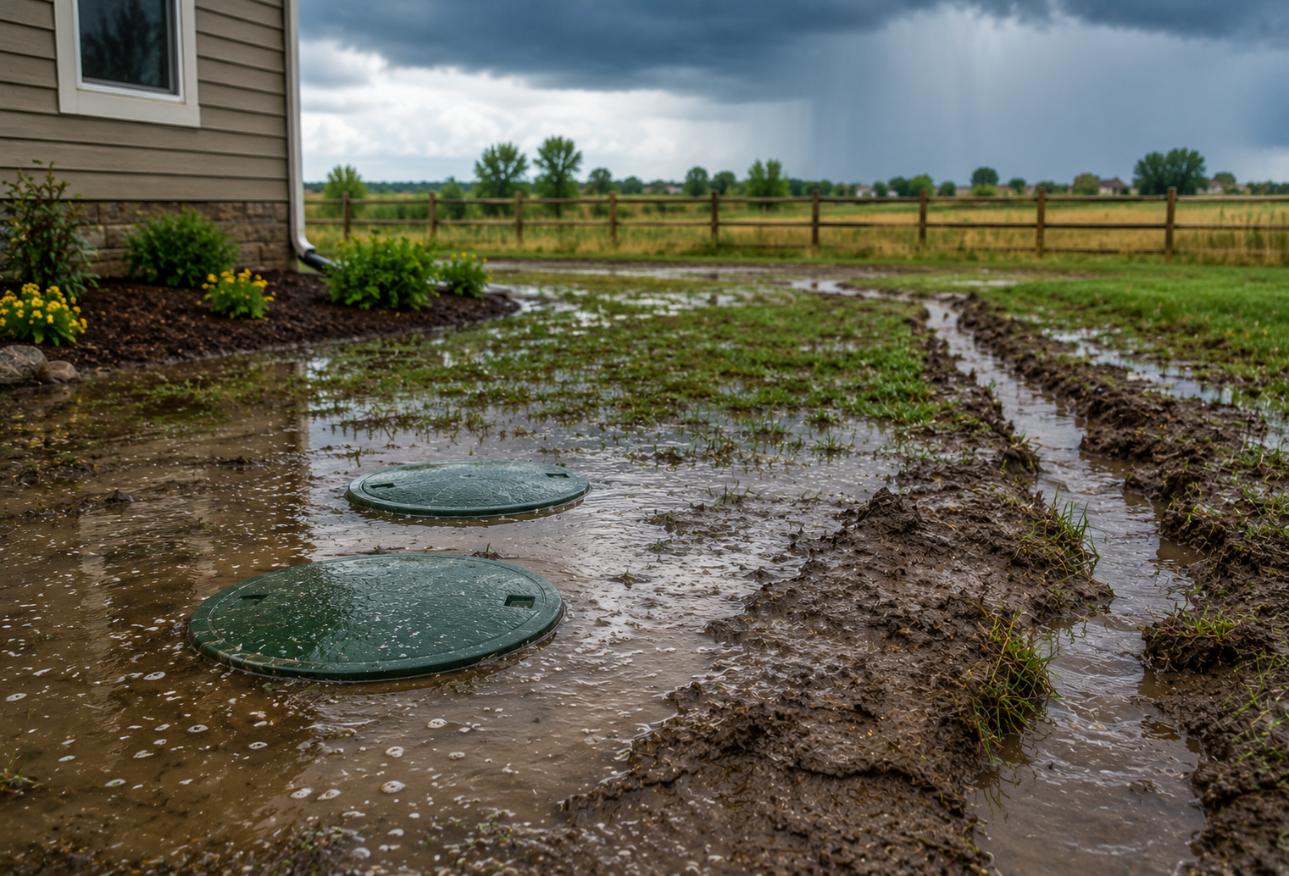
Summer rain can turn dry Front Range ground into saturated soil surprisingly quickly. For Keenesburg homeowners with septic systems, that extra moisture can become more than a muddy-yard problem when the soil around a leach field no longer has enough capacity to accept wastewater normally.
The safest response is to reduce water use, keep people and vehicles off the leach field, watch for signs of a backup, and avoid attempting to drain or alter the field yourself. A saturated leach field may recover as surrounding soil dries, but sewage surfacing outdoors, drains backing up, persistent odors, or plumbing problems throughout the home are reasons to have the septic system professionally evaluated.
What Keenesburg Homeowners Should Know
-
Heavy rain can temporarily reduce the soil’s ability to accept wastewater from a septic system.
-
Conditions around Keenesburg and the surrounding Weld County area can vary considerably from one property to another, so drainage and soil conditions matter.
-
Driving or parking on a wet leach field can compact saturated soil and potentially damage septic components.
-
Reducing laundry, long showers, and other high-volume water use can decrease the amount of wastewater entering the system while the ground is saturated.
-
Sewage appearing at the surface or backing up inside the house should be treated as a septic problem, not simply as summer mud.
Why Does a Saturated Leach Field Matter in Keenesburg?
A saturated leach field matters in Keenesburg because a septic system depends on surrounding soil to receive and treat wastewater, and rain-soaked ground can temporarily limit that process. When the soil has little remaining capacity, wastewater may move through the system more slowly or contribute to backup and surfacing problems.
This is especially relevant for rural and semi-rural properties where septic systems serve homes outside centralized sewer infrastructure. Summer storms can also be uneven along Colorado’s Front Range. One property may receive substantial rainfall while conditions only a short distance away remain comparatively dry.
Keenesburg sits in Weld County, with communities such as Hudson, Lochbuie, Fort Lupton, Roggen, and Prospect Valley helping define the surrounding service region. Local property layouts, drainage patterns, soil conditions, and septic system designs can all influence how a system responds after a soaking rain.
High Plains Sanitation Service works with septic and sanitation needs in the area. When wet weather raises questions about a system, we can help property owners determine whether they are dealing with temporary saturation or a problem that deserves professional attention.
What Do Local Conditions Tell Us About Summer Leach Field Problems?
Local conditions tell us that a wet leach field should be evaluated based on the individual property rather than rainfall alone. The amount of rain, drainage across the lot, soil conditions, system condition, household water use, and whether wastewater symptoms are present all affect what happens next.
A yard that is simply muddy after a storm does not automatically mean the septic system has failed. Likewise, assuming every septic symptom is caused by rain can allow another system problem to go unnoticed.
For local homeowners, the most useful field observations are often practical ones. Is water standing over the drain field? Did drains begin slowing after the storm? Are odors present? Is wastewater surfacing? Have toilets or fixtures started backing up?
Those observations provide more useful information than mud alone.
How Can Saturation Affect Your Septic System?
Saturation can affect a Keenesburg septic system by limiting how readily wastewater disperses into surrounding soil. The result may range from temporarily slower performance to wastewater surfacing near the leach field or backing up through household plumbing.
A household that continues using large volumes of water during saturated conditions adds more wastewater to a system already under stress. Several loads of laundry, long showers, dishwashing, and other water-intensive activities can increase that load.
Outdoor conditions matter too. Standing water and muddy soil can make inspection and service access more difficult. Driving heavy equipment or vehicles across the field while it is soft can create additional concerns.
What Warning Signs Should You Watch for After Heavy Rain?
Warning signs after heavy rain include wastewater surfacing, persistent septic odors, widespread slow drains, plumbing backups, unusual wetness over the field, and septic problems that continue after surrounding ground begins drying.
Watch for:
-
Sewage or wastewater appearing on the ground near the leach field.
-
Toilets that flush poorly or threaten to overflow.
-
Multiple drains inside the home becoming slow at the same time.
-
Gurgling or unusual plumbing behavior throughout the house.
-
Strong sewage odors indoors or around the septic area.
-
Unusually wet or soggy conditions concentrated over the leach field.
-
Septic symptoms that do not improve as normal drainage conditions return.
One slow sink may be a localized plumbing issue. Several fixtures developing problems together deserve more attention.
When Should You Call a Septic Professional?
You should call a septic professional when a saturated leach field is accompanied by sewage surfacing, household backups, persistent odors, widespread drainage problems, or symptoms that remain after the weather improves. These signs can indicate that the problem involves more than ordinary stormwater.
Homeowners can safely monitor rainfall, visible standing water, and basic plumbing performance. They can also reduce water consumption while the property dries.
DIY work should stop well before digging into a septic field, opening components unnecessarily, or trying to pump standing water away from septic components without understanding why it is there. Wastewater exposure presents sanitation concerns, and incorrect intervention can make diagnosis more difficult.
What Commonly Causes Problems During Wet Keenesburg Summers?
Wet-weather septic problems are commonly caused by saturated soil combined with normal wastewater loading, although drainage patterns, system condition, and other septic issues can contribute. Heavy rain may expose an existing weakness rather than being the only cause.
1. Saturated soil: Rain fills available pore space in the ground, reducing its ability to accept additional liquid.
2. High household water use: Laundry, showers, dishwashing, and other activities continue sending wastewater toward the field.
3. Poor surface drainage: Runoff directed toward the septic area can add unnecessary water where the system needs relatively favorable soil conditions.
4. Soil compaction: Vehicles, equipment, or repeated traffic over a wet field can compact soil.
5. An underlying septic problem: If symptoms persist after Weld County soils around the property have had time to dry, professional evaluation can help identify whether maintenance, damage, or another system issue is involved.
How Can You Protect a Saturated Leach Field?
You can protect a saturated leach field by reducing household water use, keeping traffic away from the field, maintaining sensible surface drainage, and allowing wet soil time to dry. The goal is to avoid adding unnecessary hydraulic or physical stress to the system.
During and immediately after heavy Keenesburg rain:
-
Spread laundry over several days instead of running multiple loads back to back.
-
Shorten showers and postpone unnecessary high-volume water use.
-
Do not park cars, trailers, tractors, or other heavy equipment on the field.
-
Keep roof and surface runoff from being intentionally directed toward septic areas.
-
Do not dig into a muddy field to investigate it yourself.
-
Watch indoor fixtures for developing backup symptoms.
Once conditions dry, continued septic symptoms deserve attention rather than repeated attempts to wait them out.
What Results Can You Expect as the Ground Dries?
A temporarily saturated system may perform more normally as excess soil moisture decreases, but drying weather cannot correct every septic problem. If backups, odors, surfacing wastewater, or persistent drainage issues continue, the system should be evaluated for another cause.
The timeline will not be identical for every Keenesburg property. Rainfall amount, soil, shade, grading, drainage, household water demand, and the septic system itself all influence recovery.
That is why symptom improvement is more meaningful than following an arbitrary number of days.
What Mistakes Should You Avoid With a Muddy Leach Field?
The biggest mistakes are adding excessive wastewater, compacting the wet field, assuming pumping automatically solves saturation, and ignoring sewage symptoms because the yard is already muddy.
Mistake: Doing all the laundry immediately after a storm.
Consequence: More wastewater enters a system dealing with wet soil.
Better approach: Reduce and spread out high-volume water use.
Mistake: Driving across the field to inspect it.
Consequence: Wet soil can be compacted and septic components may be vulnerable to damage.
Better approach: Keep vehicles and heavy equipment away.
Mistake: Assuming every problem will disappear when the sun returns.
Consequence: An underlying septic issue may remain undiagnosed.
Better approach: Monitor the system and arrange service when significant symptoms persist.
Mistake: Treating surfacing sewage like ordinary rainwater.
Consequence: People or pets may be exposed to wastewater.
Better approach: Avoid the affected area and seek professional assistance.
What Is a Common Wet-Weather Scenario Around Keenesburg?
A common local scenario is a rural homeowner noticing unusually soggy ground around the septic area after several periods of summer rain. At first, everything inside the house appears normal. Then multiple drains become slower as the household continues its normal laundry, shower, and dishwashing routine.
Reducing water use can lessen the immediate load while the homeowner monitors conditions. If the plumbing returns to normal as the ground dries and no wastewater surfaces, continued observation may be appropriate.
If backups, odors, or wet septic areas persist, professional evaluation is the better next step.
This is a representative scenario, not a specific High Plains Sanitation Service customer case.
Which Septic Services Can Help With Wet-Weather Problems?
Professional septic services can help determine whether wet-weather symptoms are related to temporary saturation, routine maintenance needs, or another problem requiring further evaluation. The appropriate service depends on what is happening at the property rather than on rainfall alone.
An inspection or service visit can provide a clearer picture when a Keenesburg homeowner cannot tell whether a system is recovering normally. Septic pumping may be appropriate in some circumstances, but pumping should not be treated as an automatic cure for a saturated drain field.
Should You Wait, Reduce Water Use, or Request Service?
Reducing water use and monitoring the system can be reasonable when the only problem is temporarily wet ground, while professional service is the better choice when wastewater, backups, odors, or persistent drainage symptoms are present.
| Situation | Practical Next Step |
|---|---|
| Muddy yard with normal plumbing | Reduce unnecessary water use and monitor conditions |
| Standing stormwater near the septic area | Keep traffic away and monitor drainage |
| Multiple slow drains | Reduce water use and watch closely for worsening symptoms |
| Sewage surfacing outdoors | Keep people and pets away and request professional help |
| Household sewage backup | Limit water use and request service |
| Problems continuing after soils dry | Have the septic system professionally evaluated |
Where Do We Help With Wet-Weather Septic Concerns?
We serve from Strasburg, Colorado, and this topic is especially relevant to septic property owners in Keenesburg and surrounding communities across this part of the Front Range. Nearby areas including Hudson, Roggen, Lochbuie, Fort Lupton, and Prospect Valley can experience similar summer storm and rural-property concerns.
Service availability for a specific address should be confirmed when scheduling.
What Can Happen If You Ignore Persistent Septic Symptoms?
Ignoring persistent septic symptoms can allow backups, wastewater exposure, or an underlying system problem to continue after the rain itself has passed. Waiting is less concerning when the only symptom is ordinary storm-related mud, but sewage and recurring plumbing problems deserve a different response.
A saturated yard also creates a temptation to investigate by driving, digging, or moving water around the septic area. Those actions can introduce additional problems.
If the ground begins drying but the septic symptoms do not, that difference is useful information.
Frequently Asked Questions About Saturated Leach Fields
Can heavy summer rain cause septic problems in Keenesburg?
Yes, heavy rain can contribute to septic problems when surrounding soil becomes saturated and has less capacity to accept wastewater. The effect varies by property, soil, drainage, system condition, and household water use. Mud alone does not prove the leach field has failed, so watch for plumbing and wastewater symptoms too.
Should I pump my septic tank after heavy rain in Keenesburg?
Not automatically. Pumping may be appropriate based on the tank and overall system condition, but it does not remove saturation from the soil surrounding a leach field. If you are experiencing backups, surfacing wastewater, or continuing problems, a professional can help determine the appropriate service instead of assuming pumping is the solution.
Can I do laundry when my Keenesburg leach field is saturated?
Reducing or postponing laundry is sensible when the leach field is saturated because each load sends additional wastewater into the septic system. If laundry cannot wait, spreading loads out is preferable to running several consecutively. Reducing showers and other high-volume water use can further decrease the temporary load.
How long does a saturated leach field take to dry?
There is no single drying time that applies to every property. Rainfall, soil, drainage, temperature, shade, grading, and additional storms can all affect how quickly conditions improve. Instead of relying on a fixed timeline, monitor whether standing water decreases and whether household septic symptoms improve as the surrounding ground dries.
Is standing water over a Weld County leach field always sewage?
No. Standing water after a storm may be rainwater, runoff, or water associated with the septic system, and appearance alone may not establish the source. Avoid contact with suspicious water, particularly when sewage odors or plumbing problems are also present. Professional evaluation is appropriate when wastewater may be surfacing.
Can I drive over my leach field after a Keenesburg rainstorm?
Avoid driving over a wet leach field. Vehicles and heavy equipment can compact saturated soil and may place unnecessary stress on buried septic components. Even when the route across the field seems convenient on a rural property, waiting until conditions improve is the safer approach for protecting the septic area.
Why are several drains suddenly slow after a heavy storm?
Several drains becoming slow at once can indicate a system-wide drainage or septic issue rather than a single clogged fixture. If the change occurs during saturated conditions, reduce household water use and monitor closely. Backups, sewage odors, surfacing wastewater, or problems that continue as the property dries warrant professional attention.
Should I redirect rainwater away from my Keenesburg leach field?
Keeping unnecessary surface runoff away from the leach field is generally helpful, provided drainage changes do not create problems elsewhere. Roof discharge and intentional water flow should not unnecessarily add moisture to an already wet septic area. Significant grading or drainage modifications should be planned carefully for the individual property.
Protect Your Keenesburg Septic System After Heavy Summer Rain
Wet weather does not automatically mean a leach field has failed. Careful water use, protecting the field from traffic, and knowing which symptoms require attention can help Keenesburg property owners respond appropriately while conditions improve.
Get clarity before a wet-weather septic problem gets worse.
We can help you determine the appropriate next step when septic symptoms continue after heavy rain.